Helping you understand regulations and build trust through transparent compliance.
Understanding Regulations
Not just a closed list, but a complex, living network of requirements that must be structured and simplified to make it practical and understandable.
Legal obligations are undergoing changes across various sectors, including consumer goods, toys, construction products, food-contact materials, cosmetics, medical devices, machinery, and electronic equipment. These developments are driven by sustainability objectives and stronger market-surveillance mechanisms.
Goal: Reduce complexity, clarify responsibilities, and make regulatory interconnections visible.
Building Trust
Achieving compliance involves structuring the transparent relationship between a product, its requirements, responsibilities, and traceability.
Under new regulations such as the ESPR, PPWR, and BWBR, producer responsibility extends to manufacturers, importers, distributors, and other economic operators throughout the supply chain. It becomes clear that transparent processes and reliable evidence are essential for building trust, within the supply chain and toward authorities, customers, and partners.
Goal: Ensure legal certainty, establish credibility, and maintain a sustainable market presence across all product categories.
“CEvidence” stands for “See Evidence” and reflects a commitment to transparent proof in the context of CE marking.
CEvidence.Consulting provides strategic guidance on EU product compliance, sustainability, and regulatory transparency.
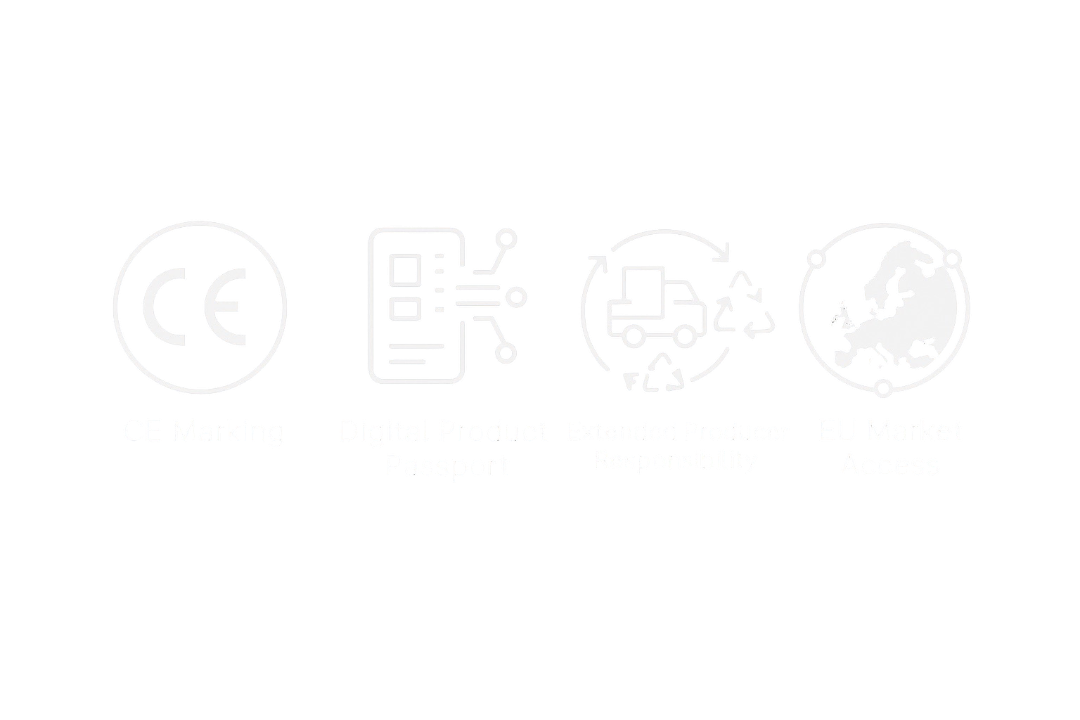
The focus lies on understanding and implementing the evolving framework of European product legislation. This includes conformity assessment, extended producer responsibility and digital product passports.
With more than 25 years of experience in quality assurance and testing of electronic and electrical systems, Thomas Frank, founder of CEvidence.Consulting, brings deep expertise in European product legislation and conformity processes.
Expertise & Advisory
Product Compliance Consulting
Thomas Frank supports companies in understanding and implementing regulatory requirements across the entire supply chain. The focus lies on structuring obligations between manufacturers, importers and suppliers, ensuring transparent responsibilities and traceable, verifiable evidence for every product placed on the EU market.

Professional use of ProductIP
ProductIP functions as a central Product Compliance Management System (PCMS). With structured workflows, delegated tasks and a complete evidence chain, ProductIP provides visibility and consistency throughout the entire product and supply chain process. As a professional user, Thomas Frank guides companies in the practical use of the platform and helps them integrate it into their daily compliance work.
Compliance Project Coordination
With long-standing experience in coordinating cross-market compliance activities, Thomas Frank supports companies in aligning suppliers, laboratories and documentation workflows throughout the entire supply chain. Focused on due-diligence processes, data validation, laboratory coordination and the preparation of complete, audit-ready conformity evidence.
Supply Chain Transparency & Evidence
Compliance is not created at the end of the process, it is built within the supply chain. CEvidence helps companies collect, validate and organise product data so that origin, materials, substances of concern and regulatory obligations become fully transparent and traceable from sourcing to market access.
CEvidence.Consulting
CEvidence.Consulting stands for clarity, transparency and reliable product data. The approach combines deep regulatory expertise with structured evidence management, enabling companies to build robust compliance frameworks while concentrating on their core business activities.
Product Scope











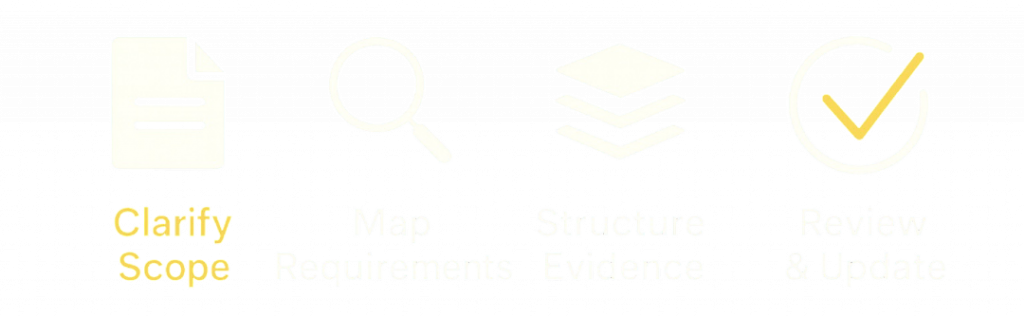
Four Steps
1. Clarify Scope
Define product, markets and roles before assigning any requirements.
2. Map Requirements
Identify all applicable legislation, standards and responsibilities.
3. Structure Evidence
Organise supplier data and documentation into a consistent, traceable system.
4. Review & Update
Reassess requirements and update evidence as regulations and supply-chain data evolve.